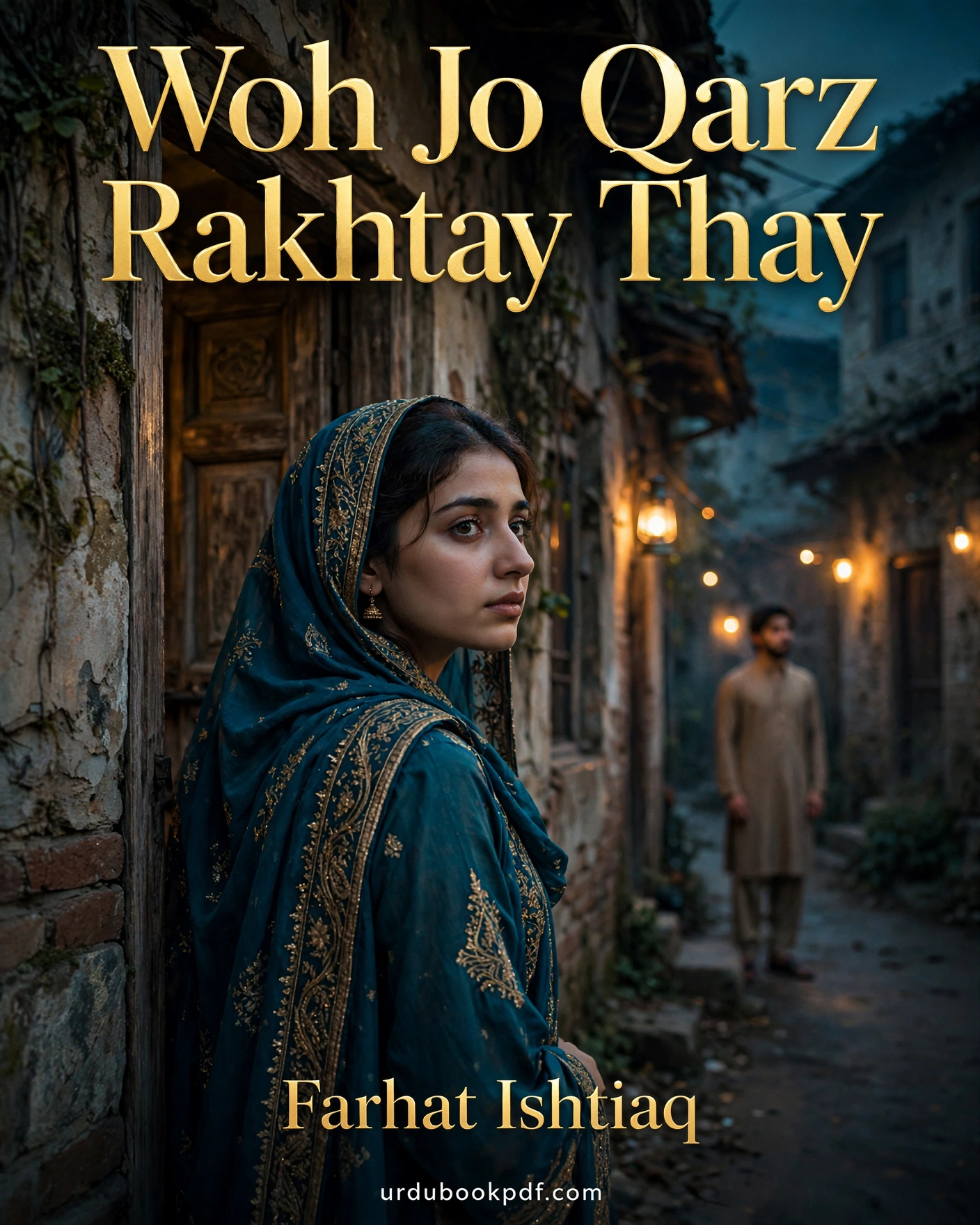
Woh Jo Qarz Rakhtay Thay by Farhat Ishtiaq is a complete social romantic Urdu novel that asks a question most romances avoid: what happens when love is real, and still not enough? It is the story of a young woman who finds her identity in her grandparents’ home, falls in love with Saad Munir, and then gives that love up by her own choice, to protect her family and its honour. Readers call it heartbreaking, beautiful, and unforgettable, often in the same sentence, and it remains one of Farhat Ishtiaq’s most discussed novels years after it first appeared in a monthly digest.
urdubookpdf.com
Quick Answer: Woh Jo Qarz Rakhtay Thay is a complete social romantic Urdu novel by Farhat Ishtiaq about emotional debt, family honour and a sacrifice made by choice. On Urdu Book PDF you can read it online and download the complete PDF using the buttons below.
Complete PDF Download
| Novel Name | Woh Jo Qarz Rakhtay Thay (fuller title: Woh Jo Qarz Rakhtay Thay Jaan Par) |
| Author / Writer Name | Farhat Ishtiaq |
| Genre | Social Romantic, Family, Emotional |
| Language | Urdu |
| Status | Complete |
| Availability | Read Online and Complete PDF Download |
| First Published | Reportedly first published in a monthly digest |
Key Facts
- Author: Farhat Ishtiaq, author of Humsafar, Mata-e-Jaan Hai Tu and Diyar-e-Dil.
- Heroine: Fariya, also spelled Fariha. Hero: Saad Munir.
- Theme: emotional debt repaid by sacrifice, not money.
- Ending: widely reported as sad and bittersweet, not a conventional happy ending.
- Same book, many spellings: Qarz/Qaraz, Rakhtay/Rakhte, with or without “Jaan Par”.
- No confirmed TV drama adaptation was found.
Story Summary of Woh Jo Qarz Rakhtay Thay
Some debts are written in a ledger. The debt in this novel is written on a life. “Woh Jo Qarz Rakhtay Thay” means “those who held debts”, and the fuller title adds “Jaan Par”, upon their lives. Farhat Ishtiaq takes that phrase seriously: her characters owe each other understanding, loyalty and forgiveness, and the novel follows what it costs to pay such debts in full.
The story opens, in effect, with a homecoming that is also a mystery. Fariya, a young woman looking for identity and belonging, comes to live with her grandparents. She is loved and respected there, yet she senses a silence around her mother’s past. Bit by bit she learns that her mother made a choice that broke her mother’s relationship with her grandparents, and that the rift has shaped Fariya’s whole life. Discovering the truth changes how Fariya sees herself, her mother and her family, and it is the beginning of her growth as much as it is a painful shock.
Saad Munir enters her life through friendship first. Readers describe their early bond as warm and teasing, the easy closeness of young people who grow up around each other, and it deepens, naturally and without spectacle, into love. Saad is a caring, steady presence, the kind of hero readers call a gentleman, and for a while their love looks like the answer to Fariya’s search for belonging: a future that is hers alone, free of her mother’s history.
But family obligations, misunderstandings and old emotional debts close in on them. Fariya comes to believe that marrying Saad would repeat her mother’s story and wound the very blood relations whose respect she has fought to protect. So she makes the decision that defines the novel: she gives up her love. Crucially, every source that describes this moment stresses that it is her choice. She does not surrender passively. She weighs her heart against her family, and she chooses her family, knowing exactly what she is losing. That choice, not any villain or accident, is the tragedy of the book, and it is also its moral centre.
The closing pages, including a last letter from Saad that readers mention more than any other scene, leave a melancholic, tender effect. There is relief in the novel’s final mood, a sense that something has been understood and, in a quiet way, healed, but there is no pretence that the loss has been undone. That honesty is why the book is still recommended, and still argued about, long after its digest publication.
What Does the Title Mean, and Why Are There So Many Spellings?
“Qarz” means debt or loan. “Rakhtay thay” means used to hold or keep. So the title says, in plain words, that some people carry debts, and the fuller form says they carry them upon their lives. The debt here is inherited in an emotional sense: a daughter feels she must repay, with her own happiness, for a mistake her mother made. The novel’s most quoted idea puts it bluntly: parents’ mistakes become debts upon their daughters, and daughters feel they must repay them in every case. Fariya’s story tests whether that belief is just, and what it does to the person who lives by it.
Roman Urdu spelling is not standardised, which is why search results show “Wo Jo Qarz Rakhte The Jaan Par”, “Wo Jo Qaraz Rakhte The Jan Par”, “Woh Jo Qarz Rakhtay Thay Jaan Per” and more. They are one novel by one author. Be wary of any listing that gives this title completely different main characters or a cheerful reunion ending: it does not match the sources that agree on Fariya and Saad, and it is likely a mixed-up listing for another book.
Characters in Woh Jo Qarz Rakhtay Thay
Fariya (Fariha): The heroine. Pure-hearted and principled, she thinks with her heart, in one reader’s memorable phrase, yet she is strong enough to choose family respect over her own love. Her journey from confusion about her mother’s past to a painful, deliberate decision is the novel’s spine.
Saad Munir: The hero. Caring, respectful and steady, he grows from Fariya’s friend into the love she sacrifices. His final letter is the scene readers cite most, and it is better encountered in the novel than summarised here.
Her grandparents are central as a home, a history and a moral claim on Fariya, but the sources used for this page do not name them as separate characters with their own plot lines, so this page does not invent names or scenes for them. That honesty matters: a short true character list is worth more than a long invented one.
| Novel Name | Woh Jo Qarz Rakhtay Thay |
| Writer | Farhat Ishtiaq |
| Genre | Social Romantic Urdu Novel |
| Format | Complete PDF, Read Online |
| Title Meaning | Those Who Held Debts (upon their lives) |
| Common Theme | Sacrifice, family honour, emotional debt |
| Language | Urdu |
| Status | Complete |
| Reading Format | PDF download and online reading |
Themes in Woh Jo Qarz Rakhtay Thay
Emotional debt: The novel’s core idea is that debts are not only financial. Guilt, gratitude and family honour create obligations that feel just as binding, and sometimes more so.
Sacrifice by choice: Fariya’s decision gains its power from being voluntary. A sacrifice imposed by force would be a different, smaller story. A sacrifice chosen, with full knowledge of its cost, is the novel’s moral argument.
Family honour and belonging: Her grandparents’ home is both refuge and demand. Belonging there means accepting its values, and Fariya’s story asks what belonging is worth when it costs love.
Identity: Fariya must separate her own story from her mother’s, and her final decision is, in a painful way, her declaration of who she is: a daughter who will not repeat the past, even at her own expense.
Love without a happy ending: The novel refuses the easy comfort of a reunion. Love is shown as genuine and still insufficient against family duty, and that refusal is what readers remember.
Is the Ending Happy or Sad? An Honest Answer
Sad, and bittersweet, by wide report. Reader reviews say plainly that “sometimes we don’t get a happy ending”, guides to Farhat Ishtiaq’s work call the ending sad but memorable, and listing sites tag the novel “sad ending”. Do not start this book expecting the couple to triumph over every obstacle: that expectation will only disappoint you, and it misses the point.
At the same time, the ending is not bleak for its own sake. Readers describe anger, love, happiness, pain and hurt across the novel, and relief at the end, with a melancholic feeling that lingers. The sadness is dignified because it comes from a choice Fariya makes for reasons she believes in, not from a twist designed to shock. If you like stories that take difficult choices seriously, this ending will satisfy you in a way a forced happy ending could not.
About Farhat Ishtiaq
Farhat Ishtiaq was born on 23 June 1980 in Karachi. She began writing stories for Urdu digests in 2004 and became one of Pakistan’s most popular novelists, with work that mostly focuses on Pakistani society, family life and love under social pressure. Her best-known novels include Humsafar, Mata-e-Jaan Hai Tu, Diyar-e-Dil and Dil se Nikle Hain Jo Lafz, and as a screenwriter she wrote Humsafar, Diyar-e-Dil, Udaari, Yaqeen Ka Safar and many more acclaimed dramas. Woh Jo Qarz Rakhtay Thay belongs to the digest tradition that made her name: intimate, emotional and rooted in family values.
A note on the rumoured drama: online forum discussion once mentioned a Hum TV remake of this novel, but the discussion itself left it unconfirmed, and no reliable source confirms a drama adaptation. This page therefore claims no drama, no cast and no air date for this title.
Who Should Read This Novel, and Who Should Skip It?
Read it if you love Farhat Ishtiaq, if you enjoy emotional family novels, if you like stories about sacrifice and honour, and if you are willing to be moved rather than simply entertained. It pairs naturally with Humsafar and Diyar-e-Dil, though it is sadder than either in mood. Skip it, or at least postpone it, if you are looking for light comedy, a thriller, or a guaranteed happy ending. The early friendship between Fariya and Saad has warmth and humour, but the novel’s heart is serious, and its final note is melancholic.
How Many Pages Is Woh Jo Qarz Rakhtay Thay?
Sources disagree, and this page says so openly rather than picking a convenient number. One PDF listing gives 97 pages, while a book database gives 240 pages. Different editions, fonts and PDF layouts easily explain such a gap, and one older file listing gives a 19 MB PDF without settling the question either. If a site states a single page count with great confidence, treat it as that edition’s count, not as a universal fact.
More Novels by Farhat Ishtiaq
If Woh Jo Qarz Rakhtay Thay moves you, continue with Farhat Ishtiaq’s other work on Urdu Book PDF: Jo Bachay Hain Sang Samait Lo by Farhat Ishtiaq, Mata-e-Jaan Hai Tu by Farhat Ishtiaq, Humsafar by Farhat Ishtiaq, and for a different author in the same emotional register, Jannat Kay Pattay by Nimra Ahmed.
Frequently Asked Questions
Who is the author of Woh Jo Qarz Rakhtay Thay?
Farhat Ishtiaq, the Pakistani novelist and screenwriter known for Humsafar, Mata-e-Jaan Hai Tu and Diyar-e-Dil.
Is Woh Jo Qarz Rakhtay Thay complete?
Yes, it is a complete novel. Use the Read Online or Download PDF button above for the complete book.
What is the story of Woh Jo Qarz Rakhtay Thay?
Fariya lives with her grandparents, uncovers her mother’s past, falls in love with Saad Munir, and sacrifices that love by choice to protect her family and its respect, rather than repeat her mother’s history.
Is the ending of Woh Jo Qarz Rakhtay Thay happy?
No, readers widely report a sad, bittersweet ending. It is tender and dignified rather than hopeless, but it is not a conventional happy ending.
Are Woh Jo Qarz Rakhtay Thay and Woh Jo Qarz Rakhtay Thay Jaan Par the same book?
Yes, the same novel. “Jaan Par” is the fuller form of the title, and spelling variants like Qarz/Qaraz refer to the same work.
Is there a drama based on Woh Jo Qarz Rakhtay Thay?
No confirmed drama adaptation was found. A Hum TV remake was rumoured in forum discussion but never confirmed there.
Can I read Woh Jo Qarz Rakhtay Thay online for free?
Yes, use the Read Online button above, or download the complete PDF with the Download PDF button.
How many pages does Woh Jo Qarz Rakhtay Thay have?
Sources disagree: 97 pages in one PDF listing, 240 in a book database. The figure depends on edition and layout, so no single count is claimed here.
Final Thoughts on Woh Jo Qarz Rakhtay Thay
Woh Jo Qarz Rakhtay Thay by Farhat Ishtiaq earns its place among her best-remembered novels not by giving readers what they want, but by giving them something truer: a young woman who understands the debt she carries, and who pays it with open eyes. Fariya and Saad Munir’s story is sad, warm, and deeply human, and its final letter will stay with you after you finish. Read it online or download the complete PDF above, and judge for yourself why readers still talk about this novel.